
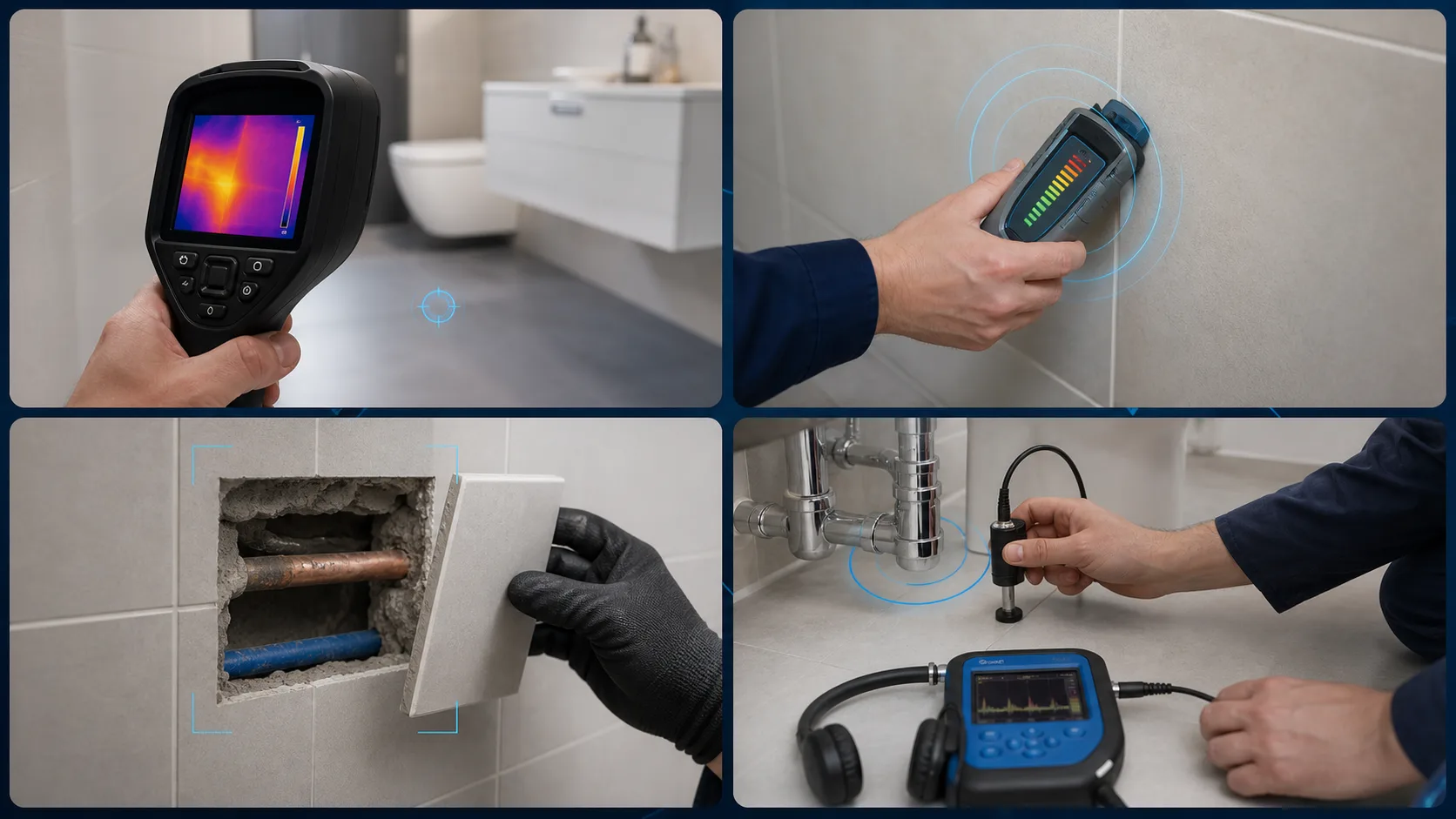
When a neighbour calls to say water is coming through their ceiling, the source is often less obvious than it looks. The stain may be directly below a bathroom, but the leak can still come from a shower tray, drain connection, waterproofing failure, pipe route, terrace detail or a separate room.
That is why the first job is not to break tiles. It is to understand the path of the water.
What usually needs checking
- The shower tray, drain and perimeter seal.
- Wall and floor junctions around the bathroom.
- Adjacent rooms where water may be travelling sideways.
- The ceiling or wall below the suspected leak.
- Moisture levels and temperature patterns.
- Any terrace, roof or external detail that could be confusing the diagnosis.
Thermal imaging can help reveal temperature patterns linked to moisture movement. Moisture checks help confirm affected zones. If pipework is suspected, acoustic or pressure observations may also be useful.
Why the neighbour’s ceiling matters
The room below often gives the clearest evidence. Access to the affected neighbour’s room helps the inspector check the direction of spread, whether the stain is active, and whether the issue appears after showering, rain or constant water pressure.
If you are dealing with this type of leak, arrange an inspection before opening tiles or blaming the wrong area. Make sure access can be arranged to both properties where possible.
The practical outcome
A good inspection should leave you with a targeted next step: where to open first, what to repair first, and what has been ruled out. That is especially important when landlords, neighbours, administrators or insurers are involved.