
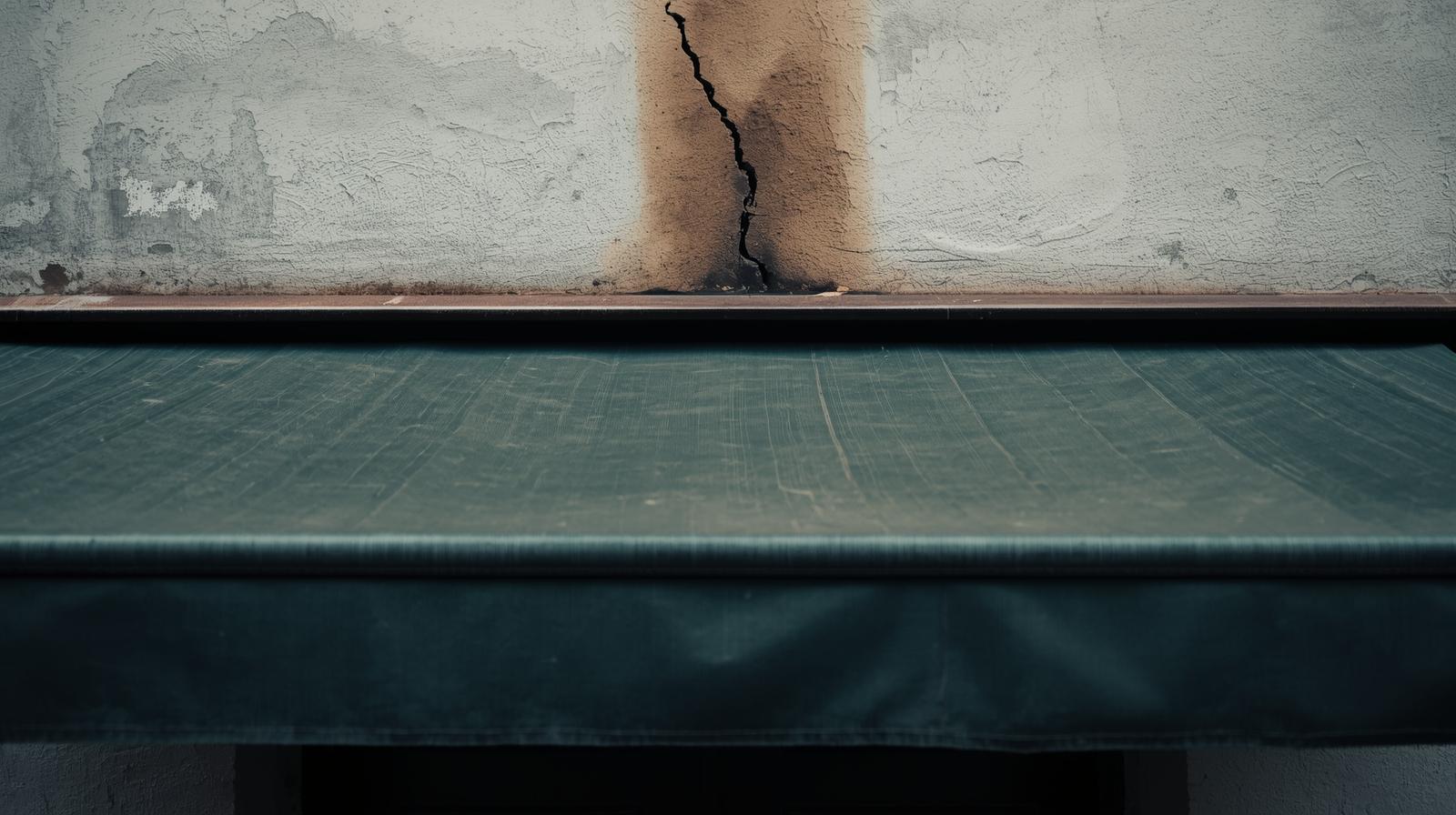
The symptom in this Gzira flat was a growing damp patch on an internal wall near the living area. There was no obvious leaking pipe at the stain, so the inspection looked at the external wall and roof details around it.
Thermal Route To The Source
Thermal imaging outside showed a wet zone behind the retractable awning. Above that area, a facade crack appeared to be acting as a water channel.
Rainwater was likely entering behind the awning bracket line and travelling into the wall. On the roof, membrane fatigue near the air-conditioning area was also noted as a vulnerable detail.
Recommended Repairs
The recommended plan was to seal and flash above the awning, including bracket penetrations, then repair vulnerable membrane areas on the roof.
A follow-up after heavy rain was also recommended so the dry-down pattern could be checked.
Why Facade Details Matter
Water ingress is not always a plumbing problem. Awning brackets, facade cracks, roof membranes and AC penetrations can all create paths for rainwater.
For this type of issue, thermal leak detection helps locate moisture patterns without starting with destructive opening works. If roof or external wall details are suspected, our terrace and water ingress inspections are often the right next step.